
Vapor and air flow insulation materials
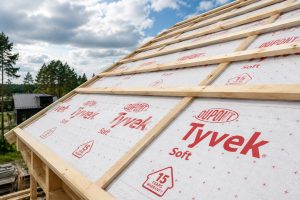
Tyvek®
Breather membranes for roofs
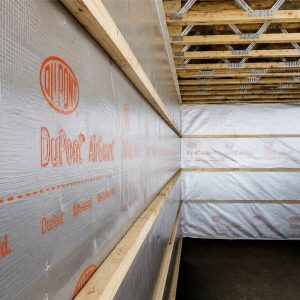
Tyvek® AirGuard
Vapor and air flow insulation materials
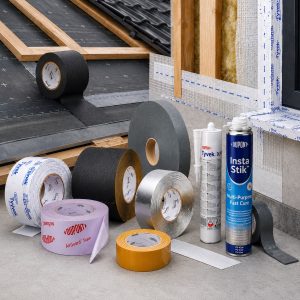
Tyvek®
Sealing products

Tyvek®
Breather membranes for walls
-
A vapor barrier Tyvek® Airguard Reflective 75 m²
The membrane is completely impervious to air convection, effectively preventing heat loss, while the special m... -
Vapor barrier film Tyvek® AirGuard SD5 75 m2
Designed to protect the thermal insulation layer from excess moisture in the room. The AirGuard® layer provide... -
Vapor barrier membrane AirGuard® Smart, 1,5 m x 50 m, 75 m²
DuPont™ Airguard® Smart is a smart vapor barrier that adapts to the humidity level in the room -
Vapor barrier membrane Tyvek® AirGuard Sd23, 1,5 m x 50 m, 75 m²
DuPont™ Tyvek® AirGuard Sd23 is a vapor barrier that effectively protects the thermal insulation layer from ex...


Tyvek®
features
Think twice, build once. Trust Tyvek®
Unique functional layer
Most traditional membranes have functional layers that are thinner than a human hair, making them easily damaged. Tyvek® film stands out because its functional layer is 6–8 times thicker, ensuring significantly greater resistance.
During construction, this layer effectively protects the roof from water penetration, and when the roof is completely covered, it becomes a secondary, long-term protection against water and wind.
Tyvek® – reliability you can count on throughout the entire life of the building.
Water and wind tightness
Test results show that traditional roof membranes lose their properties over time – they can become permeable to water and wind in less than 10 years.
This is unacceptable, as a roof must remain waterproof, reliable, and resistant throughout its entire service life
By choosing a high-quality membrane, you can ensure that your roof will remain completely protected from moisture and weather for many years to come.
Resistance to UV rays and heat
Direct UV radiation severely damages roof membranes, while heat, once the roof is covered, causes additional thermal stress, reducing their functionality.
Tyvek® film is exceptionally resistant – it can be exposed to direct UV radiation for up to 4 months and retains its properties even at temperatures of up to +100 °C for long periods of time.
This ensures that the roof membrane remains reliable and effective both during construction and throughout the entire life of the building.
Durability and scientific progress
Scientific research and independent testing consistently confirm that standard roof membranes are significantly more sensitive to UV rays and heat than Tyvek®.
These tests clearly show that traditional three-layer membranes can lose their functionality in less than 10 years, which significantly shortens the service life of the roof.
Tyvek® film, on the other hand, offers exceptional durability and reliability – the manufacturer provides a 15- or even 25-year warranty, ensuring long-term roof protection.
What is a windproof membrane and how does it differ from a roof diffusion membrane?
What is the function of a diffusion membrane?
What are the advantages of using diffusion membranes in roof and wall structures compared to non-breathable materials?
What are three-layer diffusion membranes? Their structure, advantages, and disadvantages?
What are the key parameters to consider when choosing a diffusion membrane?
- Water resistance class (W1)
- Thickness of the functional layer (the thicker, the better)
- Temperature and UV resistance
- Vapor permeability (Sd value)
- Additional: tensile strength, manufacturer’s warranty.
What is the Sd value?
What does water column height indicate?
What is the minimum water column height for diffusion membranes?
Why must membranes for roofs and walls be UV resistant?
How to protect membranes from harmful UV effects?
Does overall thickness affect the quality of a diffusion membrane?
What is the functional layer?
What is the typical thickness of the functional layer in diffusion membranes?
No need to know
everything. FAQ
Answers to frequently asked questions about films and sealing products
What is the durability of diffusion membranes?
Should diffusion membranes be taped?
Can 200-micron polyethylene film be used for sealing?
Are all sealing tapes the same?
How to choose a quality vapor barrier membrane?
- Low elasticity
- CE and EN 13984 certification
- Fire resistance ≥ E class
- Temperature resistance –40 °C to +80 °C
- Zero air permeability (Bendtsen method)
- Durability after artificial aging.
How to choose a quality sealing tape?
- Versatility of application
- UV resistance
- Operating temperature range
- Warranty.
Are all flexible sealing foams the same
Can windows be sealed with mastic?
- UV resistance (≥5–6 months)
- Paintability/plaster compatibility
- Airtightness
- Certification and durability tests
- Warranty.
Is smart vapor control suitable for my home? Will it let vapor through?
Are all reflective membranes the same?
- Sd value ≥1500 m
- Emissivity ≤0.05 (lower value = higher heat reflection, e.g. 0.05 = reflects up to 95% heat).